
Read the Luce County Owner-of-Record Card
Start a current owner inquiry with the assessment record. Match it to the right parcel and the right tax year. Luce County links its Colligo parcel gateway through Equalization. The live field labels and refresh interval are set by the county rather than published. Copy the owner label exactly as the card displays it. Note the tax year attached to that name.
| Owner name | The person, estate, trust, or entity listed for the roll year. |
|---|---|
| Mailing address | Where assessment and tax notices are sent, not proof of residence. |
| Situs | The physical location assigned to the parcel. |
| Parcel number | The tax-map identifier; copy its complete source format. |
| Last transfer | A date or sale clue to compare with the deed. |
| Deed reference | Book/page or instrument key if the card provides one. |
The roll's name is an administrative label. It is not a statement about who lives on the land. A mailing address works for lawful property correspondence, though it may sit outside Luce County or belong to an entity contact.
Open Luce County's Current Assessment Route
The Luce County Equalization page is the county's stable entry point for assessment concepts, forms, parcel divisions, classifications, and GIS resources. Equalization works with local assessors across the county. Some parcels simply have no online card. In that case the answer may sit with the assessor for the local unit, reached by public inspection or a direct request. Treat the official page as a routing step for a current owner question, not a promise that every owner-card field is visible from the landing page.
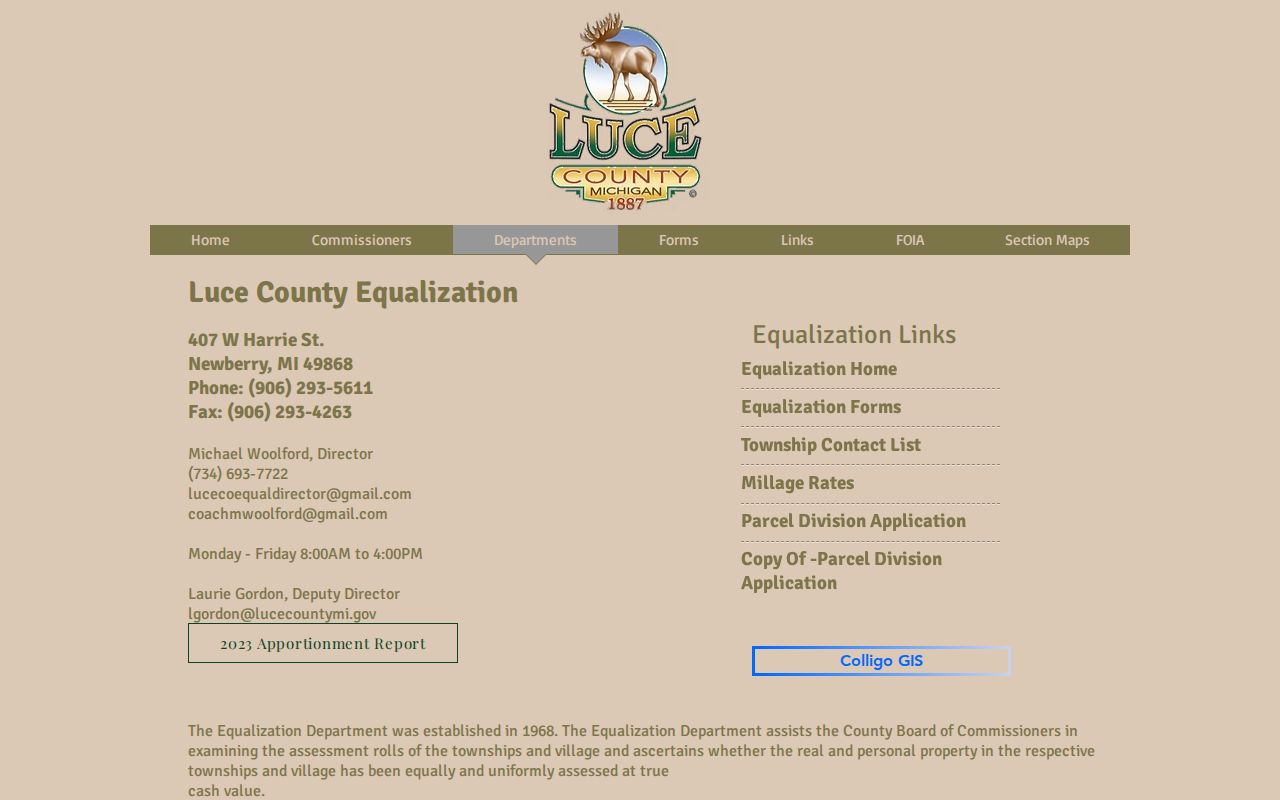
Use the county source to reach the parcel system. Then preserve the exact owner label and record year shown in the live result.
Judge How Current a Luce County Owner Record Is
Luce County publishes no stated refresh cycle for its owner records. No typical closing-to-roll delay is published either. Assessment rolls are annual administrative records. So a sale can be recorded well before the owner label appears on a map or tax card. Compare the dates on each record rather than assuming a fixed number of days.
| Date clue | What it dates | How to use it |
|---|---|---|
| Assessment year | The roll entry | Shows which year's owner label was read |
| Transfer date | The reported conveyance | Signals a possible recent-owner gap |
| Recording date | County acceptance of the instrument | Compare with the roll year |
| Request date | Your office or portal check | Makes the finding reproducible |
Freshness varies by office. Note: Do not assume a fixed update delay; confirm with the Luce County assessor that a specific deed transfer has reached the current tax roll.
Confirm the Current Luce County Owner Against the Deed
The latest deed is the best check on a transfer. It matters most when the assessment card may lag. The county Register of Deeds publishes office search and copy services, but no online grantor-grantee index or digital cutoff year.
- Read the owner name, parcel, situs, mailing address, and roll year from the assessment source.
- Call or visit the Register of Deeds with name variants, date range, parcel, and legal description.
- Request the newest matching deed and record its grantee, recording date, instrument or book/page, and vesting words.
- Compare the deed's land description with the roll, not merely the street address.
- If an entity is named, check the official Michigan entity filing without treating an agent as the landowner.
- Owner of record
- The party named on the dated assessment roll.
- Vesting
- The wording in the deed that describes how grantees hold title.
- Recording lag
- The interval between a recorded transfer and its appearance in another system.
- Registered agent
- An entity's official contact, not automatic proof of personal ownership.
Request the Newest Luce Deed Without an Online Index
A focused request works better than a broad one. Name the current roll owner and any spelling variants. Include the approximate transfer period, the local unit, the legal description, the parcel number, and any last-sale reference. Ask the clerk to report the instrument type, the parties, and the recording date. Also request the book and page or instrument number, the legal description, and the copy cost. The published real-estate search price is $0.50 per name per year, with a $5 minimum. Copies run $1 per page, and certification adds $5 per document. The vault is open by appointment Monday through Friday from 8:00 a.m. to 3:30 p.m. General office hours run to 4:00 p.m. Confirm hours before you travel.
Recent-sale gap. A roll can lag a recent sale. When the latest matching deed postdates the roll, ask the assessor how the transfer is being processed and rely on qualified title help for a legal conclusion.
Interpret a Luce Current Owner Named as an Entity
The owner field may hold more than a person's name. A trust, an estate, a company, or multiple grantees can all appear there. Keep the full punctuation and suffixes when you search. Michigan's MiBusiness Registry supplies business filings and certificates. A registered agent, though, is not the same as a beneficial owner. Trust beneficiaries may never appear on the parcel card. An estate may need a public Probate Court file and a later fiduciary deed. Only then does the owner field change. State the record's exact wording and avoid guessing about the people behind an ownership form.
Check Newberry's Current Owner in McMillan Context
Newberry is Luce County's only incorporated community. It sits within McMillan Township. A Newberry situs or a ZIP 49868 mailing line does not by itself settle the assessment jurisdiction. Use the parcel number and legal description. That aligns the village, township, county, and postal labels. Village zoning or site-plan records can name an applicant. They can also name an owner at the time of an application. They are no substitute for the current roll and the newest deed. A recent site-condominium record may also need comparison. Compare it with the recorded master deed and unit description.
Use Luce Tax History as a Currentness Check
The County Treasurer keeps permanent and delinquent tax rolls, tax histories, redemption information, and current-tax certifications. Luce County offers no public tax-bill lookup online. Call 906-293-8171 and request the specified parcel and years. A tax history can show whether the same owner label and mailing destination carry through recent records. Tax payment is not title proof. The county also warns that delinquent payments must arrive before month-end and that postmarks do not count. Keep receipt timing and ownership evidence as separate questions.
Use Luce County Owner Mail for Lawful Contact
The roll's mailing address is the documented channel for property correspondence. It may belong to an entity, a fiduciary, or an owner who lives elsewhere. Keep any letter narrow. Identify the parcel clearly. Do not publish the address or infer that the recipient occupies the land.
Lawful use. Public owner information supports purchase questions, boundary work, estate matters, and civic review. Never use it to stalk, harass, threaten, surveil, or repeatedly contact a person.
Mail to an owner of record is lawful contact. It just has to go through the right channel. Michigan's Address Confidentiality Program gives eligible survivors a substitute address with forwarding safeguards. Suppose a protected or wrong address shows up. Contact the custodian then, and ask for the correct fix or the confidentiality route.
Track each lookup on a worksheet. Record the exact query, the parcel identifier, the legal description, and the assessment year. Add the owner and address labels. Include the transfer date, the deed recording date, and the instrument reference. Note the date you contacted each office too. A no-result answer from the Register can mean several things, so press for detail. It may reflect no match for that spelling and year range. It may also mean no digitized image, or no instrument in the index searched. Each possibility points to a different next step.
Rural land needs township, range, section, acreage, and metes-and-bounds calls. A village lot calls for the plat, block, lot, or site-condominium unit instead. Parcel numbers can change after a split or combination. The recorded land description often bridges the gap better. County section-map PDFs help orient a property search. Michigan Online Land Survey Records can point to relevant survey or plat records. Neither proves title.
Keep the answer narrow and in present tense. The dated tax roll lists one owner. The latest matching deed names one or more grantees. When those facts conflict, never pick a winner from timing alone. Ask the local assessor about processing status, and ask the Register about the newest indexed instrument. If legal rights hinge on the answer, certified documents are the proper path. Professional title review belongs there too.
Note: Always keep the source date and office name with any result.